Skip to content
Resortcontrol by CruiseControl

Hotel and resort workforce management software

Every property.
One system.

Resortcontrol is hospitality workforce software: CruiseControl for hotels and resorts. Hire, onboard, train and certify every team across the estate, from the front desk to housekeeping to the kitchens. One platform, running while the hotel does.

The same platform at the same price, whether you run one property or a group.

A hotel laundry at night: a member of staff loading an industrial dryer beside trolleys stacked with folded white linen.

Floor -1 Back of house and laundry

Onboarding that starts before the first shift

Seasonal and agency staff arrive with contracts unsigned, documents uncollected and no induction on record. The same details get taken twice, on paper, by whoever is on.

Onboarding and documents Contracts, forms and e-signatures issued from the employee record the day an offer is accepted.

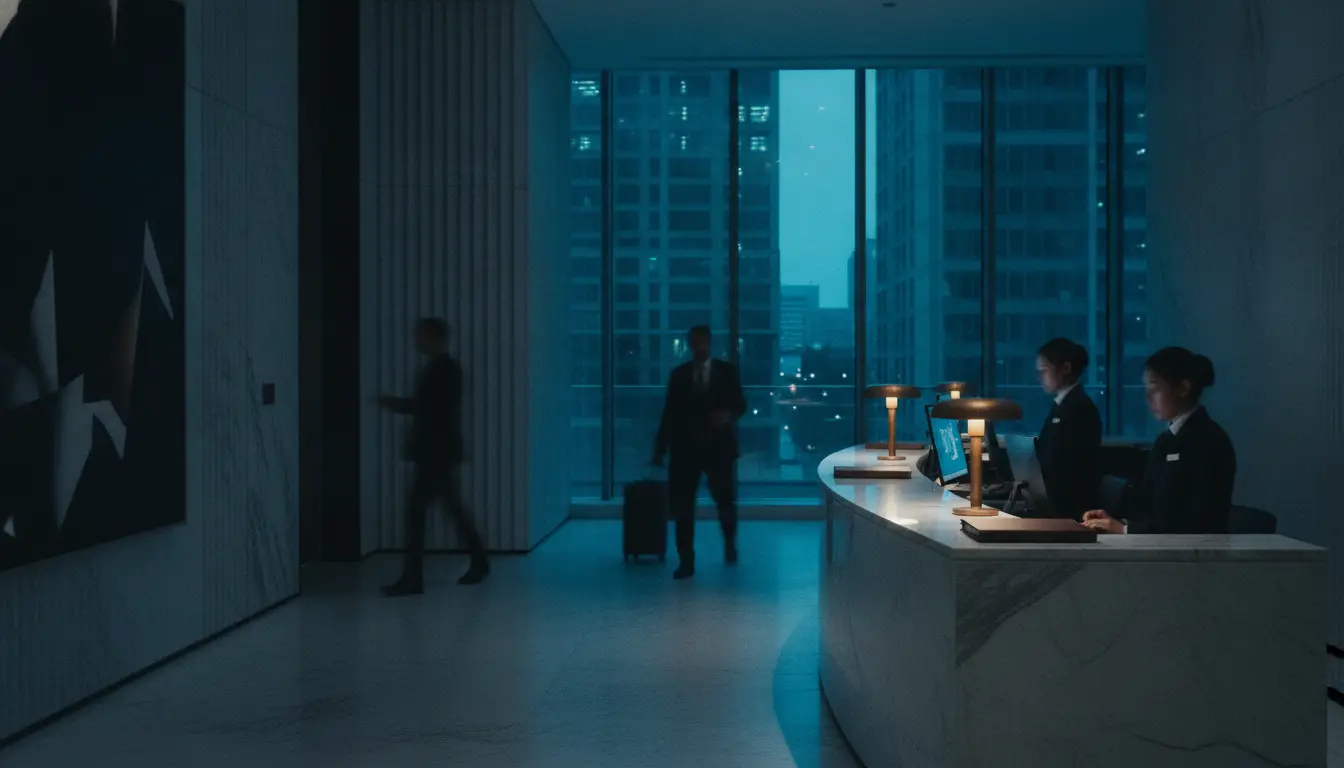
A hotel reception desk at dusk: two receptionists at a lit marble counter, a guest arriving with a case behind them.

Floor 0 Front office and lobby

Rotas that live where the records do

Shifts are built in a spreadsheet, swapped in a group chat and reconciled from memory, so nobody can say who was actually on the desk last Tuesday.

Calendar and scheduling Schedules, shifts and coverage coordinated per property, against the same records as the training.

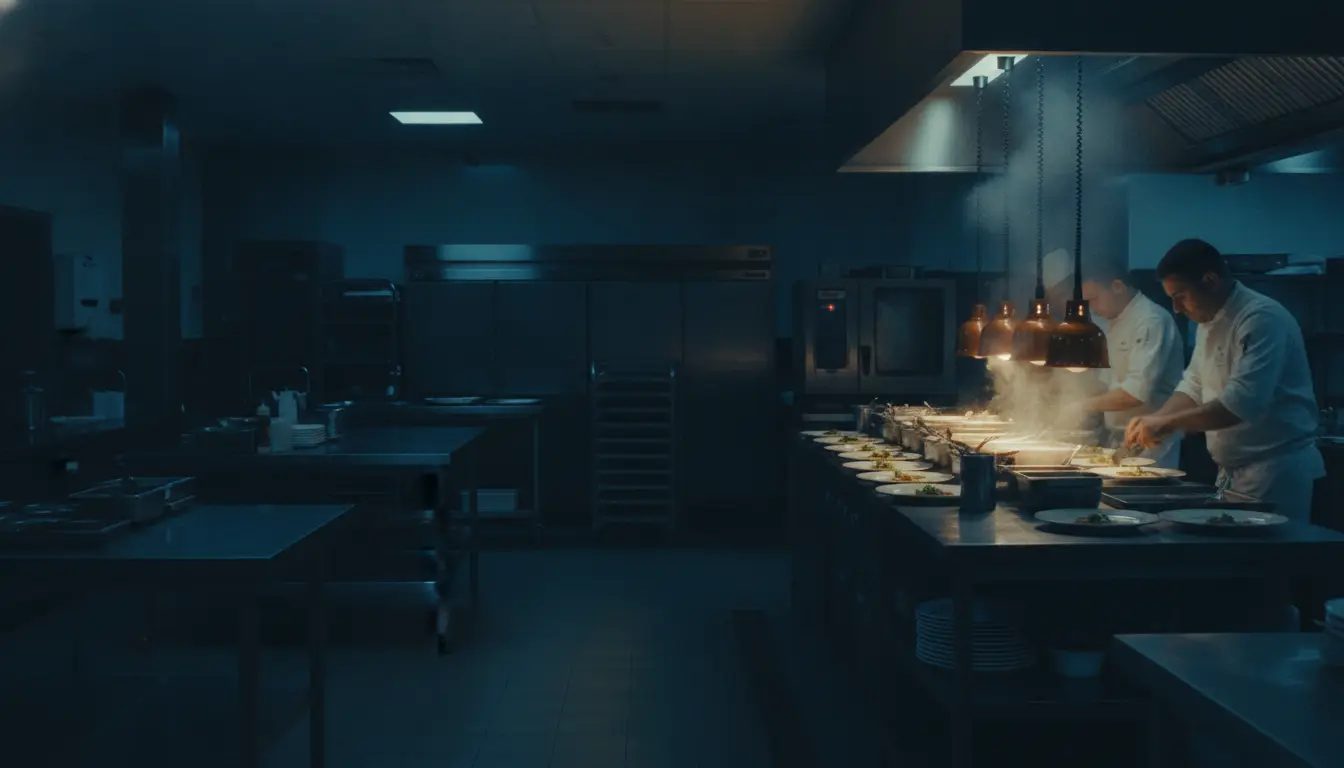
A hotel kitchen mid-service: chefs plating under the pass lights, steam rising over a line of prepared dishes.

Floor 1 Kitchens, banqueting and F&B

Certificates that surface before the inspection

Food safety certificates expire quietly. A 400-cover event runs long and the hours behind it are reconstructed at the end of the month.

Time tracking and certification Attendance and time recorded as worked and fed to payroll; certificates held with their expiry dates.

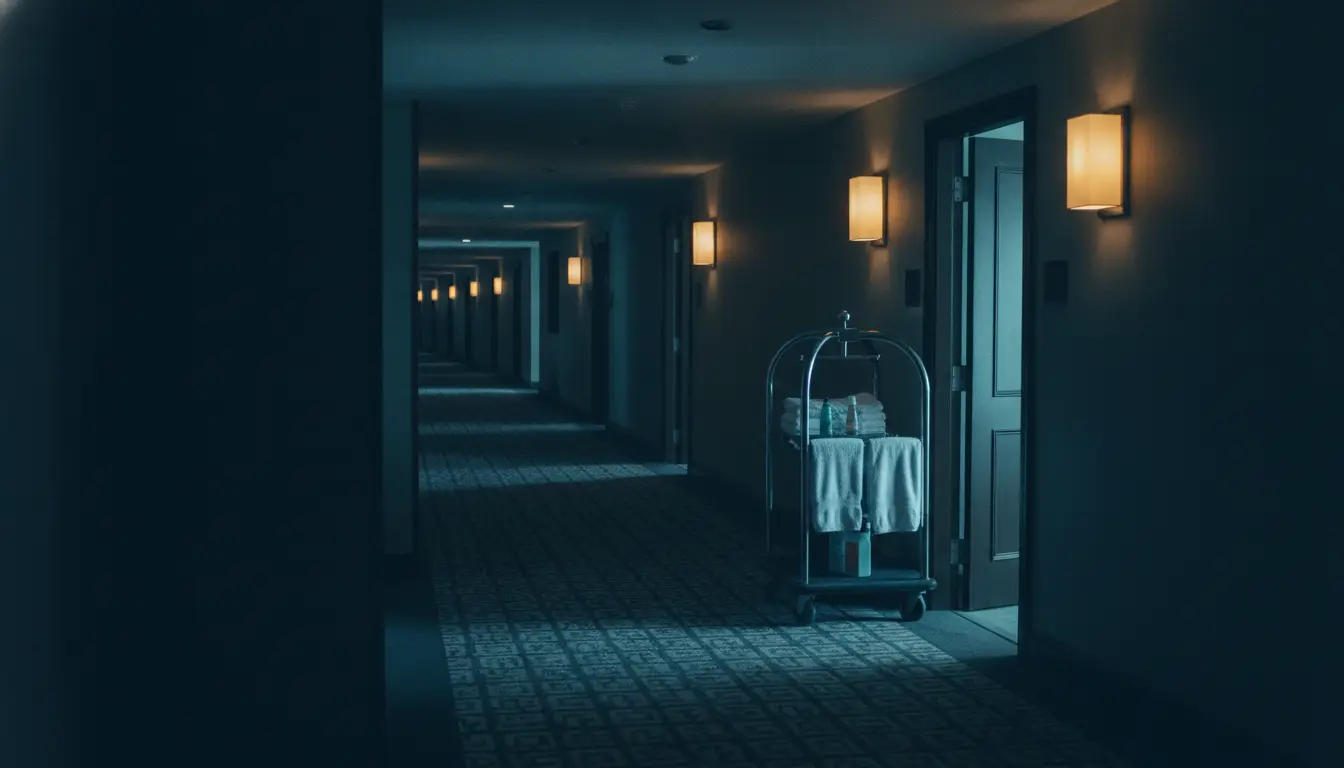
A hotel corridor late in the evening: wall lights along a patterned carpet and a housekeeping trolley stacked with towels outside an open door.

Floor 4 Guest floors and housekeeping

The highest turnover in the building

Room attendants are the largest team and the fastest changing one, and the training has to arrive with the starter rather than a fortnight later.

Learning management Courses assigned by role on day one and delivered on the phone the team already carries, tracked per person.

A resort pool terrace after dark: still water reflecting lit colonnades and stacked loungers under the shelter.

Floor 7 Spa, wellness and leisure

Qualifications with renewal dates on them

Peak season is recruited from nothing every year, while a qualified therapist at a sister property is on reduced hours and nobody at head office can see either fact.

Career navigation Skills, qualifications and career tracks mapped across the group, so internal moves are visible before a vacancy is advertised.

An executive office at night: a desk lamp over open folders, floor-to-ceiling glass looking out on a lit city skyline.

Floor 9 Executive office

One standard, running in every property

A brand standard is only a standard if every property is actually on it, and the answer currently arrives as four spreadsheets that disagree.

Reporting and alerts Training, documents and structure defined once at group level, reported back property by property.

By department

The same questions, department by department

What each department needs from the platform differs. What it is asking for usually does not: get people in, get them trained, and be able to prove it later.

Back of house and laundry

How do hotels onboard seasonal and agency staff before the first shift?

Onboarding starts when the offer is accepted rather than when the person arrives. Resortcontrol issues the contract, the forms and the induction from the employee record itself, with built-in e-signing, so documents come back signed and filed against the person instead of sitting in a folder behind the desk. The sequence is defined once and assigned automatically to every new starter in that role, which is what stops a seasonal intake being onboarded one way in March and another way in June. Because the record is the same record the training and the certificates hang off, nothing is entered twice: the details captured at hire are the details the course assignment, the department and the reporting line all read from. Agency and permanent staff go through the same sequence.

Front office and lobby

How do hotels keep rotas and training records in the same place?

Schedules, shifts and events are coordinated inside the same system that holds the employee records, so the rota is built against people whose training, certificates and department are already known rather than against names on a spreadsheet. Attendance and time are recorded as they are worked and feed both the schedule and payroll, which is what removes the reconciliation at the end of the month. Because scheduling and learning are modules of one platform rather than two subscriptions, a manager putting someone on the desk can see whether that person has been signed off, and head office can see the same thing across every property. Requests, structure and reporting lines live alongside it, so day-to-day HR for the property is not a separate system from the one the training runs in.

Kitchens, banqueting and F&B

How do hotels track food safety certificate expiry?

Certificates are held against the individual employee together with the date they were issued and the date they run out, rather than in a binder that leaves with whoever was keeping it. Resortcontrol tracks those expiry dates and raises alerts before a renewal falls due, so a lapse surfaces to a manager weeks ahead rather than to an inspector on the day. The same record holds the training that earned the certificate and the date it was completed, which is what makes "what had this person been trained on, and when?" answerable without reconstructing it afterwards. Refreshers can be reissued to everyone in a role when a procedure changes. Hours worked are recorded as they happen and feed payroll, so a long banqueting service is visible in the week it ran rather than at the month end.

Guest floors and housekeeping

How do hotels train housekeeping teams when turnover is high?

Housekeeping is usually the largest team in the building and the fastest changing one, so the training has to be assigned by role rather than arranged per person. Resortcontrol assigns the courses a room attendant needs on the day they start, delivers them on the phone the team already carries, and tracks completion against the individual rather than against a folder held by a supervisor. Tests and certificates come with the course, so being signed off is a recorded fact rather than a recollection. When a standard changes, the refresher is reissued to everyone in the role at once. Because completion is held on the employee record, a starter who moves to another property in the group arrives with their training history intact instead of starting the induction again from nothing.

Spa, wellness and leisure

How can a hotel group find qualified staff it already employs?

Professional qualifications in spa and leisure carry renewal dates, and the people holding them are spread across properties that do not normally see each other's rosters. Resortcontrol captures those qualifications at hire and holds them on the employee record with their renewal dates, so a manager sees a lapse coming rather than discovering it at an audit. Skills, competencies and career tracks are mapped across the group, which means an opening can be matched against people already employed somewhere in the estate before it is advertised outside. That is the same mapping that shows an individual what the next role requires and how far along they are. Recruitment, when it is needed, runs in the same system, with vacancies and candidate pipelines held per property.

Executive office

How does a hotel group run one standard across every property?

A brand standard is only a standard if every property is actually running it, which means defining the onboarding sequence, the courses and the documents once at group level and assigning them down rather than trusting each hotel to rebuild them. Resortcontrol does that while leaving each property its own structure, its own people and its own reporting, and leaves room for the local variation a property genuinely needs. Role-based access is what makes both views possible at once: a general manager sees their hotel, head office sees the estate, and neither is reading a report someone assembled by hand. Because completions, documents and certificates are all held against employees rather than in per-property spreadsheets, the question of who is trained, who is short, and where the same gap is appearing twice has one answer.

The platform

One record, hire to handover

The same lifecycle CruiseControl runs at sea, addressed to hotel departments instead of shipboard ranks. Each stage writes to the same employee record, so nothing has to be re-entered to move between them.

01

Recruit

Vacancies, applications and candidate pipelines per property, so a group can see where it is short before the season starts.

02

Onboard

Documents collected, signed and filed against the employee record from the moment an offer is accepted.

03

Train and certify

Courses assigned by role and department, tracked to completion, with certificates held against their expiry dates.

04

Operate

Day-to-day HR for the property: records, requests, schedules, structure and reporting in the same place as the training.

05

Progress

Career paths that show a housekeeper what supervisor requires, and the group where its next managers are coming from.

A week in one property

Property and group, in the same view

A general manager sees their hotel. Head office sees the estate. Both are reading the same records rather than two reports assembled separately.

Illustration of the platform with sample data. Not a customer, and not a performance claim.

What is in it

One platform instead of five subscriptions

Recruitment, onboarding, training, documents, scheduling and reporting are one system here rather than a training tool, an e-signature tool, a rota tool and a spreadsheet that has to agree with all three.

Employee records

One place for profiles, contracts, documents and certifications, per property and across the group.

Recruitment

Post vacancies, screen applicants and run the pipeline in one view, with a candidate-facing job board built in.

Onboarding

Guided onboarding that sequences each new starter's tasks, documents and training automatically.

Learning management

Deliver courses, tests and certificates by role and department, and track completions across every property.

Documents and e-signing

Templates, packages and built-in signing, so contracts move in minutes rather than by post.

Scheduling and time

Coordinate shifts across departments, with attendance and time records that feed scheduling and payroll.

Performance and recognition

Structured reviews, development plans, surveys and recognition, tied to the employee record.

Communication and alerts

Messaging, email and SMS that reach staff on shift, plus reminders before a certificate lapses.

The platform ships more than the eight above, including corrective actions, surveys, form building and workflow automation — the same set at sea and on land. See the full module list on CruiseControl.

The whole idea

Six departments.
Five stages.
One record.

Housekeeping turns over in March. The training shouldn't.
The problem this was built for

Access and records

Answers that survive the person who filed them

Training completions and signed documents are held against the employee with their dates, so “what had this person been trained on, and when?” has an answer that does not depend on who is on shift.

For security and data questions, CruiseControl answers questionnaires in writing. See the security page.

  • Single sign-on against the identity provider you already run
  • Two-factor authentication, and SCIM provisioning for joiners and leavers
  • Role-based access, so a general manager sees their property and head office sees the estate
  • Certification and expiry tracking, with alerts before a renewal is due
  • Audit trails: a traceable history of what was done, by whom, and when
  • Each company isolated in its own branded environment on its own subdomain

Integrations

Built to sit beside the systems you already run

Identity providers Single sign-on and SCIM provisioning
HRIS Employee records aligned with your system of record
Payroll Assignment and time data, rather than re-keying each cycle
Reporting and BI Operational data into your own reporting stack

Three mechanisms, chosen per system: an API where something needs to ask a question and get an answer now, webhooks where it needs to react to an event, and managed exports where a scheduled, consistent dataset is more useful than a live query. Scope is defined during implementation against your operating model, and implementation itself runs in four stages — discovery and solution design, configuration and integration, deployment and enablement, then optimisation — with support continuing after go-live. How integrations work · How implementation works

Book a demo

See it against your own properties

A working demo, walked through with your own departments, your own rota and your own documents. For hotel groups, resorts and independent properties.